‘Slide-rules’ rule!

Problems with medical numeracy. dsc2739.jpg

One of the big problems in medical and dental research is getting used to making sense of the statistics. Not only at the reader level but more importantly at the level of the researcher.

A couple of years ago I was researching for a presentation on clinical risk and did not have access to an electronic medical library like I do now. To check some of the facts I had to go back to some of my old dental books published in the 1990’s. This is still possible since some fundamentals of medical science have not changed in the past 50 years and what do you think I noticed?

Medical science is now at least 100x more precise than it was then say in 1975 (Hamp, S. Nyman, S. Lindhe 1975) not because the data is better but that the answer is to 4 significant figures. It’s not more accurate, it just appears more precise and this false precision is dangerous. It gives confidence and certainty where none exists.

Much of this problem could be resolved if we understood the meaning of ‘significant figures’ and that the answer for say average survival should not be more precise than the input data. Here is an example from a recent paper I reviewed:

“5.6% (4/72) teeth were effected”

In division, the answer should not have more significant figures than the divisor so instead of 5.6% it should be just 6%, otherwise, the answer is 10x more precise than the unit being measured.

To help me improve my numeracy and general feel for the numbers I just bought a 1963 Faber-Castell slide rule from eBay. The advantages beyond not needing electricity are many, it:

  • demonstrates elegant simplicity (few pieces, only two moving parts).
  • has total transparency (every register and scale is readily visible).
  • works with numbers of any size
  • has precision to 3 significant figures with an accuracy of 0.1%
  • functions include multiplication, division, chain calculations, reciprocals, squares, square roots, powers and logs plus, plus, plus.
  • easy to learn and simple to operate.
  • provides automatic parallel computations.

Interested in Slide Rules? Take a look at the  The Oughtred Society.
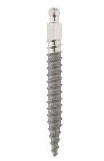
Why is implant survival a problem?

Raining on the implant parade

SFFf-1989091.0B 008

Just out of interest, I did a cross-sectional survey of the implants presenting in my surgery over the past ten days. This is just a snapshot of what happens in general practice. All the implants have been in place for five years or more,  median patient age 60 years. Over two-thirds of the implants in this snapshot were placed at other practices, so this is not a self-audit:

RESULTS

Implants with bone loss and chronic infection     58%      (95% CI; 39% to 77%)

Failed implant (mechanical)                                          4%      (95% CI; 0% to 12%)

Patients aware of a problem                                           8%      (95% CI; 0% to 19%)

Discussion

There is a grumbling problem in implantology and that is of expectation both for the dentist and the patient. Implants don’t last forever and can require a lot of expensive aftercare. Even as far back as 2008 papers were being written on the chronic infections around implants (Zitzmann & Berglundh 2008) ranging from 1% to 47%. The chart below shows the dramatic increase in publications about implant infection (peri-implantitis).

implantitis
Data extracted from Scopus citation and abstract database (periimplantitis)

The implant companies still continue to market their products based on survival and patient satisfaction data, not clinical success. On industry-sponsored patient information websites, one can read statements like ‘acts like a natural [tooth], no special care or patients are 98% are happy or very happy. Some of the cost-effectiveness data published is of very poor quality making claims the data cannot robustly support.

Survival is how long the implant remains in the mouth, not whether it is functional, aesthetic or infection free (Papaspyridakos et al. 2012; Misch et al. 2008). What patients really need to know is the success data (complication free) so they can make a fully informed choice about the repair and maintenance requirements over the long term. The conclusion of a recent systematic review on implant infection concluded more consideration should be placed on the peri-implant maintenance therapy practicalities prior to placement and restoration  (Monje et al. 2016).

To conclude, implants are a very good replacement for missing teeth, with high success rates but they are not strictly better than other more established treatments (Abt et al. 2012). Contrary to the marketing literature, they do not behave like real teeth, do need special care and definitely don’t last forever. An increasing number of patients are having problems with their implants that they will be totally unaware of it until it’s too late.

So ask yourself these three questions before having an implant

  • Do you really NEED to replace the missing/damaged tooth?
  • What are the OTHER OPTIONS for replacing these teeth or filling the gap?
  • Have you budgeted for the MAINTAI ?gNENCE, REPAIR OF REPLACEMENT COSTS?


References

Abt, E., Carr, A.B. & Worthington, H. V, 2012. Interventions for replacing missing teeth: partially absent dentition. The Cochrane database of systematic reviews, 2(2), pp.1–54.

Misch, C.E. et al., 2008. Implant success, survival, and failure: the International Congress of Oral Implantologists (ICOI) Pisa Consensus Conference. Implant dentistry, 17(1), pp.5–15.

Monje, A. et al., 2016. Impact of Maintenance Therapy for the Prevention of Peri-implant Diseases: A Systematic Review and Meta-analysis. Journal of Dental Research, 95(4), pp.372–379.

Papaspyridakos, P. et al., 2012. Success Criteria in Implant Dentistry: A Systematic Review. Journal of Dental Research, 91(3), pp.242–248.

Zitzmann, N.U. & Berglundh, T., 2008. Definition and prevalence of peri-implant diseases. Journal of Clinical Periodontology, 35(SUPPL. 8), pp.286–291.