Mandibular fractures: the influence of third molars

fractued jaw

The prevalence of mandibular fractures among facial fractures is high, reaching 76% of all facial fractures. The mandibular regions that fracture most frequently are the mandibular condyles (56.5%), mandibular symphysis (45.0%), body (25.5%), and angle (16.5%). The locations of mandibular fractures are related directly to the fragility of these bone areas: the condyle is the mandibular area with the lowest bone thickness and is most frequently fractured.

The third molar, when present, may generate a weak area in the mandibular angle and predispose this region to fracture. The authors wished to investigate this relationship.

Methods

This systematic review and meta-analysis was performed according to the Preferred Reporting Items for Systematic Reviews and Meta-Analyses (PRISMA) statement.

The population comprised patients with mandibular fractures; the exposure was the presence or absence of a third molar (3M) and the different positions of the third molar; the comparison was with other mandibular fractures; the outcome was an angle fracture.

The following inclusion criteria were applied in this systematic review: observational studies (cross-sectional, case– control, and prospective and retrospective cohort studies. Exclusion criteria were iatrogenic jaw fracture from surgery and fracture in patients with diseases of bone metabolism (osteopenia and osteoporosis).

The electronic survey was conducted by two authors in the PubMed, Scopus, Web of Science, Cochrane Library, and VHL (Virtual Health Library; BIREME (PAHO/WHO)) databases, and included publications up to January 2016, without language restriction.

The assessment of the quality of the studies included was performed using the Newcastle–Ottawa scale (NOS) for case-control studies and a modified NOS for cross-sectional studies.

Results

The systematic Search found 35 papers out of 704 which fulfilled the inclusion criteria. There were 22 case-control studies and 13 cross-sectional. 28 out of the 35 were used in the meta-analysis.

On the risk of bias assessment 5 case controlled and 2 cross sectional studies scored 8/9 on the Newcastle-Ottawa scale.

Meta-analysis results expressed as an Odds Ratio (OR)

Odds Ratio 95% CI Heterogeneity (I2)
Odds of mandibular fracture (angle) than any other mandibular fracture if 3M’s present. 3.27 2.75-4.16 81.3
Mandibular angle fracture in the presence of a 3M 3.83 3.02-4.85 83.1
Comparing a Pell and Gregory B v. A+C 1.44 1.06-1.96 87.2
Comparing a Pell and Gregory A v. B+C 0.60 0.45-0.81 87.1
Comparing a Pell and Gregory C v. A+B 1.19 0.57-2.46 96.1

Conclusions

The authors concluded: –

The results suggest that the presence of the third molar increases the chance of angle fracture by 3.27 times and that the most favourable positions of the third molar for angle fracture are classes B and II, whilst classes A and I act as protective factors.

Comments

There are three areas that need to be taken into account when considering the authors result and conclusions.

The first point is that angle of jaw fractures are not common. In a recent paper looking at mandibular jaw fractures presenting at a London teaching hospital the approximate annual incidence for angle fracture was 17 in 100,000. About half the individuals present with 2 mandibular fractures and the male: female ratio was 6.6:1(Rashid et al. 2013).

Secondly the cause of mandibular fractures varies with geographical location. Roughly 90% of fractures in the UK data were due to interpersonal violence and in Asia/India the same proportion is due to motor vehicle accidents. Fractures resulting from violence were most commonly associated

with the angle region while those related to road traffic accidents usually involve the condyle, body and parasymphysis  (Nasser et al. 2013).

Thirdly the results are expressed as an odds ratio(OR). Even though OR is a legitimate way to express an effect size especially in regard to case-control studies it may not have been the best way to convey the information in this case. When events are rare the difference between odds and risk are small but when events are common (>20%) this difference can become large, in this review it’s about 60%. From the ‘analysis = fracture forest plot in Fig.3’ the OR is 4.15 (i.e. out of 5 jaw fractures 4 will be at the angle) but when this is converted to risk ratio (RR) we get a value of 1.60 (i.e. The presence of a 3M increases the risk by 60%).

Though there is no doubt that the presence of 3M increases the chance of a mandibular angle fracture the results need to be interpreted with caution due to both high confounding and heterogeneity.

Links

The Dental Elf

Primary paper

Armond ACV, Martins CC, Glória JCR, Galvão EL, Dos Santos CRR, Falci SGM.Influence of third molars in mandibular fractures. Part 1: mandibular angle-ameta-analysis. Int J Oral Maxillofac Surg. 2017 Jun;46(6):716-729. doi:10.1016/j.ijom.2017.02.1264. Epub 2017 Mar 11. Review. PubMed PMID: 28291569.

Other references

Nasser M, Pandis N, Fleming PS, Fedorowicz Z, Ellis E, Ali K. Interventions for the management of mandibular fractures. Cochrane Database Syst Rev. 2013 Jul 8;(7):CD006087. doi:10.1002/14651858.CD006087.pub3. Review. PubMed PMID:23835608.

Rashid A, Eyeson J, Haider D, van Gijn D, Fan K. Incidence and patterns of mandibular fractures during a 5-year period in a London teaching hospital. Br J Oral Maxillofac Surg. 2013 Dec;51(8):794-8. doi: 10.1016/j.bjoms.2013.04.007.Epub 2013 Jun 2. PubMed PMID: 23735734.

Dental Elf – 21st May 2013

Peri-implantitis: lack of high quality studies for surgical regenerative treatment

implant astra

Implant treatment has a well-established body of evidence supporting its long-term success and efficacy. Following in the shadow of this success however we now have the problem of peri-implantitis, characterised by inflammation and degeneration of the hard and soft tissues surrounding the implant and eventually leading to its loss from the jaw bone. Various techniques have been advocated to treat this infection taking its origins from periodontal treatment such as non-surgical, surgical and regenerative procedures.

The purpose this study was to systematically review the literature on the surgical regenerative treatment of the peri-implantitis and to determine an effective therapeutic predictable option for its clinical management.

Methods

The review followed the PRISMA statement  (Moher et al. 2009) the protocol was also registered on the International Prospective Register of Systematic Reviews (PROSPERO) database. Searches were carried by two independent researchers using Ovid MEDLINE, PubMed, Embase, and Dentistry and Oral Sciences Source. Databases were searched from January 2006 to March 2016 and restricted to English, manual searches were also carried out in the relevant major journals. Inclusion criteria were: Human prospective and retrospective observational studies involving at least one surgical regenerative treatment method for peri-implantitis. Minimum sample size was 10 implants with no less than 12 months follow-up. Excluded studies included animal and in vitro studies, patients with uncontrolled systemic disease that put the implant at risk and ceramic or coated implants. Quality appraisal was carried out by two independent reviewers using the Cochrane Collaboration tool for assessing risk of bias in randomised trials (Higgins JPT et al. 2011)

Results

  • From 883 records only 18 fulfilled the inclusion criteria. This included 8 prospective clinical studies, seven case series and three randomised clinical trials (RCT’s). A total of 528 patients with 713 implants were treated.
  • 2 studies were at low risk of bias, 1 moderate, and 3 high. The remainder were classified as unclear.
Total mean radiological bone level change +2.97 mm (95% CI 1.58 to 2.35)
·       Mean radiological bone level + membrane +1.86 mm (95% CI 1.36 to 2.36)
·       Mean radiological bone level – membrane +2.12 mm (95% CI 1.46 to 2.78)
·       Mean radiological bone level submerged +2.17 mm (95% CI 1.87 to 2.47)
·       Mean radiological bone level non-submerged +1.91 mm (95% CI 1.44 to 2.39)
Total mean probing depth change -2.78 mm (95% CI 2.31 to 3.25)
·       Mean probing depth change + membrane -2.88 mm (95% CI 2.31 to 3.45)
·       Mean probing depth change – membrane -2.60 mm (95% CI 1.90 to 3.30)
·       Mean probing depth change submerged -2.68 mm (95% CI 1.71 to 3.64)
·       Mean probing depth change non-submerged -2.77 mm (95% CI 2.23 to 3.30)
Total mean bleeding on probing change -55% (95% CI 45.2 to 64.4)


Conclusions

The authors concluded: –

Within the limits of this systematic review, surgical regenerative treatment is a predictable option in managing peri-implantitis and improving clinical parameters of peri-implant tissues. There is no fundamental advantage of membrane use for bone graft coverage or submergence of the healing site on the final outcome of peri-implant defect regeneration. Due to the limited number of randomised clinical trials, at the time there is a lack of scientific evidence in the literature regarding the superiority of the regenerative versus non-regenerative surgical treatment

Comments

There are a few points to mention in relation to this well conducted review. Firstly, there is a lack of high quality studies with only 2 out of the 18 fulfilling the criteria and how this might influence the overall meta-analysis (this is commonly missed out in dental related systematic reviews, even though it is one of the PRISMA criteria the authors mention they adhere to). PRISMA has since been updated (Moher et al. 2015).   Secondly, the risk of bias tool is designed for RCT’s (3/18) and there was no mention of using one of the tools specifically designed for non-randomised observational studies (Sterne et al. 2016; Wells 2013).

Finally, the author concludes that surgical regenerative treatment is a predictable option for the treatment of peri-implantitis but fails to mention how well or poorly this performs against standard non-regenerative debridement of the lesion. The reason I mention this is that a second paper was published by members of the same team, in the same institution, in the same month that could have shed some light on clinical effectiveness (Ramanauskaite et al. 2016).

First Posted on the National Elf Service

Links

Primary paper

Daugela P, Cicciù M, Saulacic N. Surgical Regenerative Treatments for Peri-Implantitis: Meta-analysis of Recent Findings in a Systematic Literature Review. J Oral Maxillofac Res. 2016 Sep 9;7(3):e15. eCollection 2016 Jul-Sep. Review. PubMed PMID: 27833740; PubMed Central PMCID: PMC5100640.

Other references

Original review protocol on PROSPERO

Higgins JP, Altman DG, Gøtzsche PC, Jüni P, Moher D, Oxman AD, Savovic J, Schulz KF, Weeks L, Sterne JA; Cochrane Bias Methods Group; Cochrane Statistical Methods Group. The Cochrane Collaboration’s tool for assessing risk of bias in randomised trials. BMJ. 2011 Oct 18;343:d5928.

Sterne JA, Hernán MA, Reeves BC, et al. ROBINS-I: a tool for assessing risk of bias in non-randomised studies of interventions. BMJ. 2016 Oct 12;355:i4919. doi: 10.1136/bmj.i4919. PubMed PMID: 27733354; PubMed Central PMCID: PMC5062054.

Wells, G.A., 2013. Newcastle Ottawa scale Coding Manual for Case-Control Studies. The Ottawa Hospital Research Institute.

Ramanauskaite A, Daugela P, Faria de Almeida R, Saulacic N. Surgical Non-Regenerative Treatments for Peri-Implantitis: a Systematic Review. J Oral Maxillofac Res. 2016 Sep 9;7(3):e14. eCollection 2016 Jul-Sep. Review. PubMed PMID: 27833739; PubMed Central PMCID: PMC5100639.


The Holy-Mouth-Men (Body Rituals of the Nacirema by H.Miner)

I love this research paper published  in American Anthropologist, vol 58, June 1956. pp. 503-507. 

Cosmetic Dentistry 1914
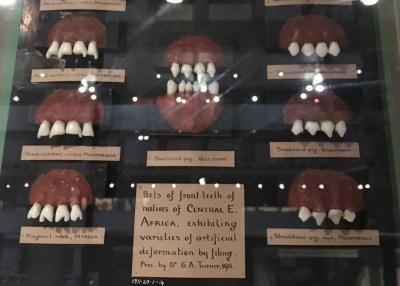
African Cosmetic Dentistry 1914 ( Pitt-Rivers Museum)

“In the hierarchy of magical practitioners, and below the medicine men in prestige, are specialists whose designation is best translated as “holy-mouth-men.” The Nacirema have an almost pathological horror of and fascination with the mouth, the condition of which is believed to have a supernatural influence on all social relationships. Were it not for the rituals of the mouth, they believe that their teeth would fall out, their gums bleed, their jaws shrink, their friends desert them, and their lovers reject them. They also believe that a strong relationship exists between oral and moral characteristics. For example, there is a ritual ablution of the mouth for children which is supposed to improve their moral fiber.

The daily body ritual performed by everyone includes a mouth-rite. Despite the fact that these people are so punctilious[4] about care of the mouth, this rite involves a practice which strikes the uninitiated stranger as revolting. It was reported to me that the ritual consists of inserting a small bundle of hog hairs into the mouth, along with certain magical powders, and then moving the bundle in a highly formalized series of gestures[5].

In addition to the private mouth-rite, the people seek out a holy-mouth-man once or twice a year. These practitioners have an impressive set of paraphernalia, consisting of a variety of augers, awls, probes, and prods. The use of these items in the exorcism of the evils of the mouth involves almost unbelievable ritual torture of the client. The holy-mouth-man opens the client’s mouth and, using the above mentioned tools, enlarges any holes which decay may have created in the teeth. Magical materials are put into these holes. If there are no naturally occurring holes in the teeth, large sections of one or more teeth are gouged out so that the supernatural substance can be applied. In the client’s view, the purpose of these ministrations[6] is to arrest decay and to draw friends. The extremely sacred and traditional character of the rite is evident in the fact that the natives return to the holy-mouth-men year after year, despite the fact that their teeth continue to decay.

It is to be hoped that, when a thorough study of the Nacirema is made, there will be careful inquiry into the personality structure of these people. One has but to watch the gleam in the eye of a holy-mouth-man, as he jabs an awl into an exposed nerve, to suspect that a certain amount of sadism is involved. If this can be established, a very interesting pattern emerges, for most of the population shows definite masochistic tendencies. It was to these that Professor Linton referred in discussing a distinctive part of the daily body ritual which is performed only by men. This part of the rite includes scraping and lacerating the surface of the face with a sharp instrument. Special women’s rites are performed only four times during each lunar month, but what they lack in frequency is made up in barbarity. As part of this ceremony, women bake their heads in small ovens for about an hour. The theoretically interesting point is that what seems to be a preponderantly masochistic people have developed sadistic specialists.