Mandibular fractures: the influence of third molars

fractued jaw

The prevalence of mandibular fractures among facial fractures is high, reaching 76% of all facial fractures. The mandibular regions that fracture most frequently are the mandibular condyles (56.5%), mandibular symphysis (45.0%), body (25.5%), and angle (16.5%). The locations of mandibular fractures are related directly to the fragility of these bone areas: the condyle is the mandibular area with the lowest bone thickness and is most frequently fractured.

The third molar, when present, may generate a weak area in the mandibular angle and predispose this region to fracture. The authors wished to investigate this relationship.

Methods

This systematic review and meta-analysis was performed according to the Preferred Reporting Items for Systematic Reviews and Meta-Analyses (PRISMA) statement.

The population comprised patients with mandibular fractures; the exposure was the presence or absence of a third molar (3M) and the different positions of the third molar; the comparison was with other mandibular fractures; the outcome was an angle fracture.

The following inclusion criteria were applied in this systematic review: observational studies (cross-sectional, case– control, and prospective and retrospective cohort studies. Exclusion criteria were iatrogenic jaw fracture from surgery and fracture in patients with diseases of bone metabolism (osteopenia and osteoporosis).

The electronic survey was conducted by two authors in the PubMed, Scopus, Web of Science, Cochrane Library, and VHL (Virtual Health Library; BIREME (PAHO/WHO)) databases, and included publications up to January 2016, without language restriction.

The assessment of the quality of the studies included was performed using the Newcastle–Ottawa scale (NOS) for case-control studies and a modified NOS for cross-sectional studies.

Results

The systematic Search found 35 papers out of 704 which fulfilled the inclusion criteria. There were 22 case-control studies and 13 cross-sectional. 28 out of the 35 were used in the meta-analysis.

On the risk of bias assessment 5 case controlled and 2 cross sectional studies scored 8/9 on the Newcastle-Ottawa scale.

Meta-analysis results expressed as an Odds Ratio (OR)

Odds Ratio 95% CI Heterogeneity (I2)
Odds of mandibular fracture (angle) than any other mandibular fracture if 3M’s present. 3.27 2.75-4.16 81.3
Mandibular angle fracture in the presence of a 3M 3.83 3.02-4.85 83.1
Comparing a Pell and Gregory B v. A+C 1.44 1.06-1.96 87.2
Comparing a Pell and Gregory A v. B+C 0.60 0.45-0.81 87.1
Comparing a Pell and Gregory C v. A+B 1.19 0.57-2.46 96.1

Conclusions

The authors concluded: –

The results suggest that the presence of the third molar increases the chance of angle fracture by 3.27 times and that the most favourable positions of the third molar for angle fracture are classes B and II, whilst classes A and I act as protective factors.

Comments

There are three areas that need to be taken into account when considering the authors result and conclusions.

The first point is that angle of jaw fractures are not common. In a recent paper looking at mandibular jaw fractures presenting at a London teaching hospital the approximate annual incidence for angle fracture was 17 in 100,000. About half the individuals present with 2 mandibular fractures and the male: female ratio was 6.6:1(Rashid et al. 2013).

Secondly the cause of mandibular fractures varies with geographical location. Roughly 90% of fractures in the UK data were due to interpersonal violence and in Asia/India the same proportion is due to motor vehicle accidents. Fractures resulting from violence were most commonly associated

with the angle region while those related to road traffic accidents usually involve the condyle, body and parasymphysis  (Nasser et al. 2013).

Thirdly the results are expressed as an odds ratio(OR). Even though OR is a legitimate way to express an effect size especially in regard to case-control studies it may not have been the best way to convey the information in this case. When events are rare the difference between odds and risk are small but when events are common (>20%) this difference can become large, in this review it’s about 60%. From the ‘analysis = fracture forest plot in Fig.3’ the OR is 4.15 (i.e. out of 5 jaw fractures 4 will be at the angle) but when this is converted to risk ratio (RR) we get a value of 1.60 (i.e. The presence of a 3M increases the risk by 60%).

Though there is no doubt that the presence of 3M increases the chance of a mandibular angle fracture the results need to be interpreted with caution due to both high confounding and heterogeneity.

Links

The Dental Elf

Primary paper

Armond ACV, Martins CC, Glória JCR, Galvão EL, Dos Santos CRR, Falci SGM.Influence of third molars in mandibular fractures. Part 1: mandibular angle-ameta-analysis. Int J Oral Maxillofac Surg. 2017 Jun;46(6):716-729. doi:10.1016/j.ijom.2017.02.1264. Epub 2017 Mar 11. Review. PubMed PMID: 28291569.

Other references

Nasser M, Pandis N, Fleming PS, Fedorowicz Z, Ellis E, Ali K. Interventions for the management of mandibular fractures. Cochrane Database Syst Rev. 2013 Jul 8;(7):CD006087. doi:10.1002/14651858.CD006087.pub3. Review. PubMed PMID:23835608.

Rashid A, Eyeson J, Haider D, van Gijn D, Fan K. Incidence and patterns of mandibular fractures during a 5-year period in a London teaching hospital. Br J Oral Maxillofac Surg. 2013 Dec;51(8):794-8. doi: 10.1016/j.bjoms.2013.04.007.Epub 2013 Jun 2. PubMed PMID: 23735734.

Dental Elf – 21st May 2013
Extra-oral implants: barclips versus magnets

20131208-151541.jpg

Patients may develop severe facial defects as a consequence of trauma, cancer surgery or congenital disorders. Craniofacial prosthesis to restore tissue loss in the eye, ear, nose and at multiple sites have been developed over the years to improve the individual’s quality of life and disguise the aesthetic problems created post surgery. These craniofacial prostheses can be retained either with skin adhesives or mechanically with extraoral implants.The purpose of this systematic review (Brandao et al. 2016) was to analyze the current data to identify the best retention system for implant-retained craniofacial prostheses.

Methods

The review followed the PRISMA statement (Moher et al. 2009), the protocol was also registered on the International Prospective Register of Systematic Reviews (PROSPERO) database. Searches were conducted by two independent reviewers in MEDLINE using PubMed and Web of Science databases. Dates were limited to January 2005 to September 2015 and the English language. Manual searches were also carried out in the relevant major journals. Eligibility criteria were as follows: studies published in English describing at least 10 participants evaluating different types of retention system or presented information on implant survival, peri-implant soft tissue reaction, or prosthetic complications in the aftercare period. Exclusions included case reports and case-series and narrative reviews. Two independent reviewers selected studies for inclusion, abstracted data and assessed risk of bias/quality using the Jadad scale (Jadad et al. 1996). Outcome was defined as implant survival, and peri-implant soft tissue reaction related to the extraoral implants and complications caused by the retention systems.

Results

  • 12 studies fulfilled the inclusion criteria (2 prospective and 10 retrospective).
  • The quality of the evidence was low, 7 scored 0/5 and 5 scored 1/5 on the Jadad scale.
  • 492 participants were included, mean age 48 years. All selected studies for meta-analysis were retrospective.
Primary Outcomes (Implant survival)
Overall implant survival rate was 90.1%
Non-irradiated sites 93.3%
Irradiated sites 82.2%
Auricular 99.1%
Orbital 85.2%
Nasal 89.5%
Secondary outcome (Peri-implant soft tissue reaction)
Grade 0 55.4%
Grade 1 22.4%
Grade 2 15.6%
Grade 3 7.2%
Grade 4 0.2%
Prosthesis types (n), retention system (bar clips/magnets)
Nasal 125,81,22
Auricular 353, 129,18
Orbital 268, Mostly magnets
Large facial 14, 8,6
  • Retention system failure 29 of 159 implants with magnets (18.2), 25 of 79 implants with bars (31.6)

Conclusion

the authors concluded

The limited data collected indicate that the type of retention system appears not to affect the prosthetic treatment outcome or the survival of extraoral implants, and no definitive conclusions as to the best retention system can be drawn. Further well-designed research such as randomized clinical trials (RCTs) comparing both options should be performed considering participant preferences.

Comments

The results of this review should be considered with caution as the main limiting factor (which the author does address in the discussion section) was the quality of the primary research. By its very nature, the area for study does not lend itself to large numbers of participants or the undertaking of RCTs. It was interesting to note that the author used the Jadad scale to assess quality even though there were no RCTs and the use of this scale is  explicitly discourages in the Cochrane Handbook of Systematic Reviews of Interventions (Higgins & Green 2009) since it has a strong emphasis on reporting rather than conduct.

The small sample sizes compound the problem of the type of defect, site, duration of study and prosthesis. The author cites survival rates in the results but they contain neither time frame nor confidence intervals, also a definition for the grading scale for peri-implant soft tissue reaction is missing.

An interesting area for discussion is whether the included studies are cohort studies or case-series (Agha et al. 2016; Dekkers et al 2012) as the studies the authors included resemble an amalgamation of multiple case-reports rather than a clearly structured study cohort or RCT. In this review the difficulty in producing any ‘high quality’ survival data figures would add more weight to defining the studies as case-series, since a central feature of a cohort study is that it enables anabsolute risk estimate for the outcome to be calculated.

Links

Dental Elf Summary Review Link

Primary paper

Brandao, T.B. et al., 2016. A systematic comparison of bar-clips versus magnets. Journal of Prosthetic Dentistry, 117(2), p.321–326.e2.

Other references

Agha, R.A. et al., 2016. Systematic review of the methodological and reporting quality of case series in surgery. British Journal of Surgery, 103, pp.1253–1258.

Dekkers OM,et al. Distinguishing case series from cohort studies. Ann Intern Med. 2012;156:37-40.

Higgins, J. & Green, S., 2009. 8.3.3 Quality scales and Cochrane reviews. Cochrane Handbook for Systematic Reviews of Interventions, p.192. Available at: http://handbook.cochrane.org/chapter_8/8_3_3_quality_scales_and_cochrane_reviews.htm [Accessed March 18, 2017].

Jadad, A.R. et al., 1996. Assessing the quality of reports of randomized clinical trials: Is blinding necessary? Controlled Clinical Trials, 17(1), pp.1–12.

Moher, D. et al., 2009. Preferred Reporting Items for Systematic Reviews and Meta-Analyses : The PRISMA Statement. , 6(7).

Short dental implants for the atrophic posterior mandible?

Figure-6-Radiographical-appearance-of-4-mm-implants-patient-04-09-Study-Center

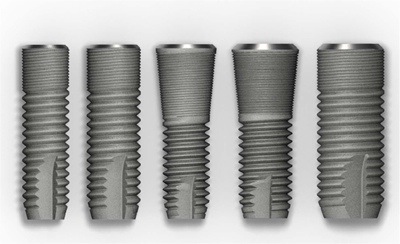
The main aim of this systematic review is to look at implant based restorative options for restoring the atrophic posterior mandible using osseointegrated dental implants. The atrophic posterior mandible is defined here as having a residual ridge height of 8mm from the inferior dental nerve to the crest of the ridge. The two options considered are short dental implants < 8mm in length placed in pristine bone compared to standard long implants >8 mm placed after bone augmentation procedures, in this care either autogenous onlay grafts or non-onlay autogenous and xenogeneic bone grafts

Methods

This review followed the PRISMA statement. Searches were screened by two independent researchers using Medline, and Cochrane Oral Health Group databases. Databases were searched from January 1st 2006 to July 30th 2016 and restricted to English, manual searches were also carried out in the relevant major journals.

Inclusion criteria were: Randomised clinical studies (RCT’s) that included clinical or radiological outcomes of the surgical strategies for rehabilitation of atrophic posterior mandibles in partially edentulous patients. This including any dimensional change, survival rate and adverse event and follow-up from 12 to 24 months. Excluded studies included animal studies, repeated reports of the same study, and studies including patients who were heavy smokers, drinkers, or had poor oral hygiene.

Quality appraisal was carried out by each of the authors  using the Cochrane Collaboration tool for assessing risk of bias in randomised trials. The primary outcomes were implant failure and marginal bone loss. Secondary outcomes were biological complications and prosthesis failure.

Results

  • From 138 records only 12 fulfilled the inclusion criteria. A total of 353 patients with 674 implants were treated.
  • None of the papers selected were judged as having a low risk of bias.
  • The authors ranked the studies into three categories:
    • Group A: 5 studies which compared outcomes of standard implants placed in augmented bone (long implants group) vs. outcomes of short implants placed in pristine bone (short implants group).
    • Group B: 4 studies which compared outcomes of standard implants placed in bone augmented with onlay block (onlay blocks group) vs. outcomes of standard implants placed in augmented bone with any of the other augmentation procedures that did not involve onlay blocks (non-onlay blocks group).
    • Group C: 4 studies not included in category A) or B). Meta-analysis could not be performed.
Group A Risk Ratio 95% Confidence Interval P-Value
Short implant v. long implant (Implant failure) 1.59  0.54 to 4.69 0.397
Short implant v. long implant (Prosthesis failure) 1.49  0.0.56 to 3.96 0.426
Short implant v. long implant (biological complications) 2.82  1.81 to 4.4 <0.0001
Mean Diff 95%Confidence Interval P-Value
Short implant v. long implant (marginal bone loss) 0.05 mm 0.026 to 0.079 <0.0001
Group B Risk Ratio 95% Confidence Interval P-Value
Onlay Group v. Non-onlay Group 1.81  0.42 to 7.84 0.43
  Mean Diff 95% Confidence Interval P-Value
Onlay Group v. Non-onlay Group 0.006 mm  -0.19 to 0.177 0.946


Conclusions

The authors concluded:-

Findings from subgroup analyses revealed that

(1) short implants placed in the posterior atrophic areas of partially edentulous mandibles were associated with superior outcomes compared with long implants in augmented bone, such as lower rate of biological complications and of peri-implantbone loss; whereas

(2), there was no evidence that onlay augmentation was inferior to any of theother augmentation techniques employed

Comments

Even though the results of this systematic review and meta-analysis favour short implants over standard implants placed in augmented bone the evidence must be interpreted with extreme caution for the following reasons:

  • A wider literature search may have found more relevant papers.
  • There were no studies that were at a low risk of bias.
  • The mean number of implant in the studies were 28/arm of study leading wide confidence intervals
  • The study durations were very short and only one study extended beyond 4 years, 5 out of 12 studies were only 12 months long.

In general, there are issues with statistical v. clinical significance. Even though the risk ratio favours short implants in terms of reduced biological complications there are no other metrics where there is a visible clinical difference; an example would be marginal bone loss of 0.05mm. Some qualitative research would be interesting to explore the patient’s experience of bone augmentation procedures in terms of morbidity against short implant placement into pristine bone.

Links

Primary paper

Toti, P. et al., 2017. Surgical techniques used in the rehabilitation of partially edentulous patients with atrophic posterior mandibles: A systematic review and meta-analysis of randomized controlled clinical trials. Journal of Cranio-Maxillofacial Surgery.

Other references

Dental Elf – 2nd Dec 2015