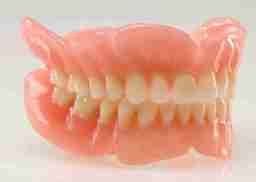
Complete overdentures retained by mini implants.

Posted Dental Elf 10/03/2017

Complete DenturesWith the advances in preventative dentistry one consequence has been patients becoming edentulous later in life. Accepting and adapting to conventional complete denture can be extremely challenging both physically and psychologically. There is now good evidence to support implant supported mandibular overdentures (Feine et al., 2002) using standard implants.
The aim of this review was to evaluate the use of mini-implants (diameter <3mm) to retain complete over-dentures in terms of survival, marginal bone loss, satisfaction and quality of life (Lemos et al, 2016).

Methods

The review followed the PRISMA statement (Moher et al., 2009) and was registered with PROSPERO.  Searches were conducted in PubMed/Medline, Embase and the Cochrane Library database checking articles published up to September 2016. In addition, they conducted a hand search of high impact journals in the field of implant retained prosthodontics. The eligibility criteria were, randomised controlled trials (RCTS) or prospective studies published in English. Two reviewers independently selected studies for inclusion, abstracted data and assessed risk of bias using the Newcastle-Ottawa Scale. The primary outcome was the survival rates of the mini implants; and the secondary outcomes included marginal bone loss, satisfaction and quality of life with the mini implants when they were used for retaining overdenture prosthesis.

Results

  • 24 studies (4 RCTs, 20 prospective observational studies).
  • Risk of bias scores were 6 papers scored 9/9, 2 scored 8/9, 2 scored 7/9, 13 scored 6/9 and one paper scored 5/9
  • A total of 2492 mini implants and 386 standard implants were placed in 896 patients.
  • Mean age 65.93
  • No formal meta-analysis was carried out
  • Primary outcomes
    • Mini implant survival rate of 92.32% over 1-7 years
    • Maxillary arch implants had a higher failure rate at 31.17%
  • Secondary outcomes
    • Marginal bone loss below 1.5mm
    • Overdenture prosthesis retained by mini implants exhibited a significant increase in retention, stability chewing, speaking, comfort, aesthetics and improvements in satisfaction/quality of life.
    • Overdenture survival 90.58%

Conclusions

The authors concluded

Within the limitations of this study, the present systematic review indicates that the use of mini implants for retaining overdenture prosthesis may be considered an alternative treatment, since it presents high survival rates of mini implants, acceptable marginal bone loss, and improvements in variables related to satisfaction and quality of life of patients.

Comments

This systematic review adopted elements of the PRISMA protocol and identified a good number of prospective studies. A risk of bias analysis was undertaken with the authors scoring 10 papers as low risk of bias and 14 at a high risk of bias. Their outcome measurements were a combination of quantitative and qualitative data. Unfortunately, there was no meta-analysis undertaken and the survival rates given were missing both confidence intervals and a time frame. A quick review of the quantitative data provided by the review authors in table 2 revealed the mode for patients per study was 30 and the mode for follow-up was I year. The two comparison systematic reviews (Dantas et al, 2014; Raghoebar et al, 2014) which the authors concurred with reference high survival rates had similar extremely short follow-up periods and small sample sizes. The results from this systematic review therefore need to be interpreted with extreme caution due to problems with the external validity of the primary research and the synthesis of that data within the review.

Links

Primary Paper

Lemos CA, Verri FR, Batista VE, Júnior JF, Mello CC, Pellizzer EP. Complete overdentures retained by mini implants: A systematic review. J Dent. 2017 Feb;57:4-13. doi: 10.1016/j.jdent.2016.11.009. Review. PubMed PMID: 27888049.

Other references

Dantas Ide S, Souza MB, Morais MH, Carreiro Ada F, Barbosa GA. Success and survival rates of mandibular overdentures supported by two or four implants: a systematic review. Braz Oral Res. 2014;28:74-80. doi: 10.1590/S1806-83242013000600012. Review. PubMed PMID: 24402059.

Feine JS, Carlsson GE, Awad MA, Chehade A, Duncan WJ, Gizani S, Head T, Lund JP, MacEntee M, Mericske-Stern R, Mojon P, Morais J, Naert I, Payne AG, Penrod J,Stoker GT, Tawse-Smith A, Taylor TD, Thomason JM, Thomson WM, Wismeijer D. The McGill consensus statement on overdentures. Mandibular two-implant overdentures as first choice standard of care for edentulous patients. Montreal, Quebec, May 24-25, 2002. Int J Oral Maxillofac Implants. 2002 Jul-Aug;17(4):601-2. Review. PubMed PMID: 12182304.

Moher D, Liberati A, Tetzlaff J, Altman DG; PRISMA Group.. Preferred reportingitems for systematic reviews and meta-analyses: the PRISMA statement. PLoS Med.2009 Jul 21;6(7):e1000097. doi:10.1371/journal.pmed.1000097. PubMed PMID:19621072; PubMed Central PMCID: PMC2707599.

Raghoebar GM, Meijer HJ, Slot W, Slater JJ, Vissink A. A systematic review of implant-supported overdentures in the edentulous maxilla, compared to the mandible: how many implants? Eur J Oral Implantol. 2014 Summer;7 Suppl 2:S191-201. Review. PubMed PMID: 24977255.

Raghoebar, G. M., Meijer, H. J. A., Slot, W., Slater, J. J. R. and Vissink, A. (2014) ‘A systematic review of implant-supported overdentures in the edentulous maxilla, compared to the mandible: how many implants?’, European journal of oral implantology, 7 Suppl 2(November 2016), pp. S191-201.
 

Oral care in nursing homes

imagesOne challenge to our future healthcare system will come from the care requirement of frail patients living in residential care. Data suggests that the size of the UK population aged over 65 will rise by 60% to 16 million over the next 25 years, 5% being over 85 years old (Batchelor 2015). 80% will end up live in some form of residential home, being looked after by professional staff rather than family members (Broad et al. 2013). Two major barriers exist:
  • Residents responsive behaviour – defined as physical or verbal actions, such as grabbing, screaming, and resisting care, in response to a negatively perceived stimulus.
  • Residents lack of motivation or ability to perform their own oral hygiene.

The objective of this review is to evaluate the effectiveness of strategies that nursing home care providers can apply to either prevent/overcome residents’ responsive behaviours to oral care, or enable/motivate residents to perform their own oral care.

Methods

The review followed the PRISMA statement (the protocol was also registered on the International Prospective Register of Systematic Reviews (PROSPERO) database.
Searches were carried by two independent researchers using Medline, Embase, Evidence Based Reviews-Cochrane Central Register of Controlled Trials, CINAHL, and Web of Science. Databases were searched up to April 2016 with no language restrictions, and manual searches were also carried out in the relevant major journals.

Inclusion criteria were as follows: Qualitative observational studies and mixed-methods studies including reviews relating to strategies that formal care providers can use to motivate oral health care and overcome responsive behaviour for frail older adults in residential care. Exclusion criteria were non-empirical and qualitative research, healthy or independent residents or care provided by family, students or managers.

Study outcomes were resident’s oral health scores, self-performed oral care, responsive behaviour and level of staff assistance. 
Quality appraisal was carried out by two independent reviewers using the Quality Assessment Tool for Quantitative studies and Estabrooks Quality Assessment and Validity Tools for Cross Sectional Studies.

Results

  • From 7362 records only 7 studies fulfilled the inclusion criteria, four of which report different aspects of one research project. Therefore. 3 prospective cohort studies and 1 cross-sectional study were included.
  • Methodological quality was low/moderate for one study and weak for three studies.
  • Plaque index scores reduced by approximately 40%
  • Bleeding index scores reduced by approximately 35%
  • Denture plaque scores reduced by 23%
  • Resistance to care reduced by approximately 45%

Conclusions

The authors concluded: –

Potentially promising strategies are available that nursing home care providers can apply to prevent/overcome residents’ responsive behaviours to oral care or to enable/motivate residents to perform their own oral care. However, studies assessing these strategies have a high risk for bias. To overcome oral health problems in nursing homes, care providers will need practical strategies whose effectiveness was assessed in robust studies.

Comments

This review highlights the lack of studies relating to the important issue of oral health maintenance of frail older patients. As our population ages this problem is only going to increase in complexity. Though the results were good but the sample sizes are very small (5,7,13 and 97 patients respectively) and the duration of the study was very short (2-8 weeks).

Other longer-term observational studies not identified in this review of routine care have shown a degrading of oral hygiene irrespective of maintenance regime, and regression to 40% had unacceptable hygiene, high levels of resistance and cleaning being left largely undone with assisted tooth brushing times as low as 16 seconds (Willumsen et al. 2012; De Visschere et al. 2015; Carter et al. 2009). The reasons being increased frailty and cognitive capacity over time with the average patient staying in high dependency residential care for 16 months, compounded with high turn-over of trained care staff.   In addition the recent Cochrane review by Albrecht et al (Dental Elf – Oct 10th – 2016):-

found insufficient evidence to draw robust conclusions about the effects of oral health educational interventions for nursing home staff and residents.

Links

Original Post: Dental Elf – June 30th – 2017

Primary paper

Hoben M, Kent A, Kobagi N, Huynh KT, Clarke A, Yoon MN. Effective strategies to motivate nursing home residents in oral care and to prevent or reduce responsive behaviors to oral care: A systematic review. PLoS One. 2017 Jun 13;12(6):e0178913. doi:10.1371/journal.pone.0178913. eCollection 2017. PubMed PMID: 28609476.

Review Protocol on PROSPERO

Other references

Batchelor, P. The changing epidemiology of oral diseases in the elderly, their growing importance for care and how they can be managed. Age and Ageing, 2015 44(6), pp.1064–1070.

Broad JB, Gott M, Kim H, Boyd M, Chen H, Connolly MJ. Where do people die? An international comparison of the percentage of deaths occurring in hospital and residential aged care settings in 45 populations, using published and available statistics. Int J Public Health. 2013 Apr;58(2):257-67. doi: 10.1007/s00038-012-0394-5. Epub 2012 Aug 15. Erratum in: Int J Public Health. Int J Public Health. 2013 Apr;58(2):327. PubMed PMID: 22892713.

Carter, K.D. et al., 2009. Caring for Oral Health in Australia Residential Care. Australian Institute of  Health and Welfare, (48), pp.1–53.

De Visschere L, de Baat C, De Meyer L, van der Putten GJ, Peeters B, Söderfelt B, Vanobbergen J. The integration of oral health care into day-to-day care in nursing homes: a qualitative study. Gerodontology. 2015 Jun;32(2):115-22. doi: 10.1111/ger.12062. Epub 2013 Jun 20. PubMed PMID: 23786637.

Willumsen T, Karlsen L, Naess R, Bjørntvedt S. Are the barriers to good oral hygiene in nursing homes within the nurses or the patients? Gerodontology. 2012 Jun;29(2):e748-55. doi: 10.1111/j.1741-2358.2011.00554.x. Epub 2011 Oct 24. PubMed PMID: 22023222.


The Holy-Mouth-Men (Body Rituals of the Nacirema by H.Miner)

I love this research paper published  in American Anthropologist, vol 58, June 1956. pp. 503-507. 

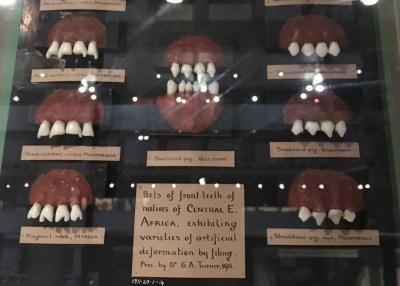
Cosmetic Dentistry 1914
African Cosmetic Dentistry 1914 ( Pitt-Rivers Museum)

“In the hierarchy of magical practitioners, and below the medicine men in prestige, are specialists whose designation is best translated as “holy-mouth-men.” The Nacirema have an almost pathological horror of and fascination with the mouth, the condition of which is believed to have a supernatural influence on all social relationships. Were it not for the rituals of the mouth, they believe that their teeth would fall out, their gums bleed, their jaws shrink, their friends desert them, and their lovers reject them. They also believe that a strong relationship exists between oral and moral characteristics. For example, there is a ritual ablution of the mouth for children which is supposed to improve their moral fiber.

The daily body ritual performed by everyone includes a mouth-rite. Despite the fact that these people are so punctilious[4] about care of the mouth, this rite involves a practice which strikes the uninitiated stranger as revolting. It was reported to me that the ritual consists of inserting a small bundle of hog hairs into the mouth, along with certain magical powders, and then moving the bundle in a highly formalized series of gestures[5].

In addition to the private mouth-rite, the people seek out a holy-mouth-man once or twice a year. These practitioners have an impressive set of paraphernalia, consisting of a variety of augers, awls, probes, and prods. The use of these items in the exorcism of the evils of the mouth involves almost unbelievable ritual torture of the client. The holy-mouth-man opens the client’s mouth and, using the above mentioned tools, enlarges any holes which decay may have created in the teeth. Magical materials are put into these holes. If there are no naturally occurring holes in the teeth, large sections of one or more teeth are gouged out so that the supernatural substance can be applied. In the client’s view, the purpose of these ministrations[6] is to arrest decay and to draw friends. The extremely sacred and traditional character of the rite is evident in the fact that the natives return to the holy-mouth-men year after year, despite the fact that their teeth continue to decay.

It is to be hoped that, when a thorough study of the Nacirema is made, there will be careful inquiry into the personality structure of these people. One has but to watch the gleam in the eye of a holy-mouth-man, as he jabs an awl into an exposed nerve, to suspect that a certain amount of sadism is involved. If this can be established, a very interesting pattern emerges, for most of the population shows definite masochistic tendencies. It was to these that Professor Linton referred in discussing a distinctive part of the daily body ritual which is performed only by men. This part of the rite includes scraping and lacerating the surface of the face with a sharp instrument. Special women’s rites are performed only four times during each lunar month, but what they lack in frequency is made up in barbarity. As part of this ceremony, women bake their heads in small ovens for about an hour. The theoretically interesting point is that what seems to be a preponderantly masochistic people have developed sadistic specialists.