
Recommendations for the re-opening of dental services: a rapid review of international sources

International_flag_globe

Link to Dental Elf

The coronavirus 2 (SARS-CoV-2 (Covid-19)) pandemic has shut, or severely restricted the provision of only but the most essential dental care globally. From the data now currently available we have past the initial peak of infection within the population but it may still take a considerable time to develop a treatment or vaccine for the virus, in the meantime we will have to learn to function with the virus in the community. The purpose of this rapid review was to scope through the current international guidelines on re-opening dental services to help policy and decision makers establish robust practical evidence-based guidelines (Cochrane, 2020).

 Methods

 Between the 2nd and 6th May a rapid review was conducted of the international guidance  for reopening dental services utilising the WHO and the Alliance for Health Policy and Systems Research approach. A grey literature search was undertaken with the assistance of the information scientists at Cochrane Oral Health. Single data extraction was performed and quality was not assessed or validated.

Results

  • The review identified 12 guidance documents from 11 countries between the 18th March to the 5th
  • Below are listed the recommendations by domain that scored >50%:
    • Practice preparation and patient considerations
      • Patient triage by telephone (92%)
      • Social distancing in the waiting area reception (75%)
    • PPE for dental practice personnel
      • Always wear face mask (67%)
      • Unsuspected COVID-19 patients
        • Eye protection (100%)
        • FFP2 mask (50%)
      • Unsuspected COVID-19 patients undergoing AGPs
        • Disposable surgical gown (75%)
        • FFP2 mask (67%)
        • Surgical hat (50%)
      • Confirmed COVID19 patients
        • Eye protection, single use of gloves and disposable surgical gown (100%)
        • FFP2 mask (75%)
        • Surgical hat (67%)
      • Confirmed COVID19 patients undergoing AGPs
        • FFP2 mask (83%)
      • Management of the clinical room
        • Clinical room should be kept clear (50%)
      • Dental procedures.
        • Reduce or avoid AGPs (100%)
        • Reduce the risk of transmission (92%)
        • Rubber dam and high-volume suction (83%)
        • High volume suction (92%)
        • Minimally invasive procedures (50%)
      • Post-operative cleaning/disinfection/waste management
        • Cleaning and disinfection of all surfaces following every patient contact (75%)

Conclusions

The authors concluded:

‘This rapid review has provided a summary of the international guidance documents published to date. It summarises the main elements of the included documents and highlights several key messages intended to assist policy and decision makers to produce comprehensive national guidance for their own settings. In the majority of the sources addressing specific COVID-19 concerns, there was no referenced, underpinning evidence’.

 Comments

This rapid review generated a substantial volume of data that can be challenging to interpret. To help develop some context of the balance of information I extracted data both at the domain and subgroup level to produce a summary weight of consensus per domain (See Figure 1.).

RR_international

What the chart shows us is that there is a high degree of agreement about the clinical aspects of managing individual dental patients, as seen from the PPE and procedures domains, even though there is weak evidence supporting these recommendations. Guidance on how we are going to solve the re-opening problem is significantly weaker (p=0.01) in the domains of practice preparation and patient considerations, management of the clinical room, and post-operative procedures. There is nothing new here in terms of guideline construction as they are generally formulated with very little stakeholder involvement, evidence-base, or applicability (Domains 2,3 and 5 of the AGREE II criteria) (Howe, 2017). The purpose of the review was to identify these weaknesses and address them in the future guideline  development.

Disclaimer:  The article has not been peer-reviewed; it should not replace individual clinical judgement, and the sources cited should be checked. The views expressed in this commentary represent the views of the author and not necessarily those of the host institution. The views are not a substitute for professional advice.

References

COCHRANE. 2020. Recommendations for the re-opening of dental services: a rapid review of international sources [Online]. Available: https://oralhealth.cochrane.org/news/recommendations-re-opening-dental-services-rapid-review-international-sources [Accessed].

HOWE, M. S. 2017. What is the methodological quality of published dental implant guidelines? Evid Based Dent, 18, 35-36.
Which comes first, the mask or the gown?

Dental Elf link

surgery-hospital-doctor-care-royalty-free-thumbnail

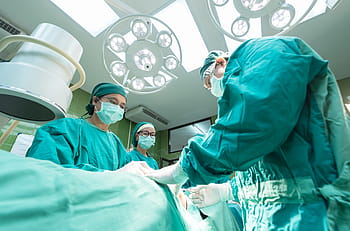
As the profession starts planning its phased return to clinical work in dental practice I thought it would be a good time to look through the updated ‘COVID-19: personal protective equipment use for aerosol generating procedures (AGPs)’ from Public Health England (PHE, 2020), and I became immediately confused as I referred back to my oral surgery training. Which comes first, the mask or the gown? It was quite challenging to find any recent primary research papers on surgical donning protocols so  I have referenced a recent protocol from the NHS Foundation Trust (Newcastle_Hospitals, 2017). The two protocols are presented below (See Table 1.).

Public Health England

donning instructions for AGPs

Newcastle upon Tyne Hospitals standard surgical protocol
1.     Remove jewellery 1.    Remove jewellery
2.     Tie hair back 2.    Tie hair back + disposable surgical cap
3.     Hand hygiene 3.    Respirator/surgical mask
4.     Gown 4.    Eye protection/visor
5.     Respirator 5.    Hand hygiene
6.     Eye protection/visor 6.    Gown
7.     Gloves 7.    Gloves

Table 1. Comparative donning protocols

The protocols diverge after Stage 2 where the standard surgical protocol involves wearing a surgical cap to prevent the possible contamination of the sterile field by falling hair, but also to prevent contamination of the hair during AGP’s/surgery. The protocol then goes, respirator/surgical mask, eye protection, hand hygiene, gown, and finally gloves. This process reduces the risk of cross contamination of the hands, gown, and gloves prior to treatment. The PHE guidance flips the protocol around where the hands are washed, then the gown, respirator, eye protection, and finally gloves are donned. The contentious area is that if the PPE following the PHE protocol needs to be replaced for the next patient there is an increased risk of cross contamination from the clinicians hands as they have now touched the head, face, ears and gown prior to gloving , this could be reduced in the standard surgical protocol. It would appear that the PHE guidelines are possibly based on an American Centre for Disease Control document from 2007(CDC, 2007) regarding ‘isolation precautions for preventing transmission of infectious agents in healthcare settings’ which then evolved into their ‘PPE guidelines for coronavirus disease’ (CDC, 2020). These guidelines were developed for treating patients in isolation wards where the number of actively infected individuals would be close to 100% (WHO, 2020) rendering cross contamination negligible as all the patients already have the disease.

At present there is a high degree of uncertainty over the prevalence of infected/recovered individuals in the population who could attend a dental surgery for treatment, this uncertainty increases the possibility of cross infection via the sessional use of PPE if an asymptomatic patient should attend for treatment. This also holds true if the PPE is going to be changed between AGPs as there is also a risk of cross contamination of the new PPE, wearer, and surgery environment if doffing and re-donning is not performed perfectly. In a study by Phan and co-workers they found that 11% of scrub samples, and 7% of face samples were positive for respiratory virus after doffing (Phan et al., 2019b), and overall 90% of observed doffing was incorrect (Phan et al., 2019a). As a precautionary principle perhaps these small but important changes in the donning of PPE should be considered; mask, visor, hand hygiene, then gown and gloves. The concern here is not about maintaining sterility as in routine surgery but trying to avoid virus transfer to the new PPE while we await more data on the risk posed by AGPs of dental origin to both the patients and the dental team.

Disclaimer:  The article has not been peer-reviewed; it should not replace individual clinical judgement, and the sources cited should be checked. The views expressed in this commentary represent the views of the author and not necessarily those of the host institution. The views are not a substitute for professional advice.

References

NEWCASTLE_HOSPITALS. 2017. Surgical Scrub, Gown and Glove Procedure [Online]. The Newcastle upon Tyne Hospitals NHS Foundation Trust. Available: http://www.newcastle-hospitals.org.uk/downloads/policies/Infection%20Control/SurgicalScrubGownandGloveProceduresPolicy201706.pdf [Accessed].

PHE.2020. PHE COVID-19 Donning quick guide gown version [Online]. Public Health England. Available: https://www.gov.uk/government/publications/covid-19-personal-protective-equipment-use-for-aerosol-generating-procedures [Accessed].

CDC. 2007. Guideline for Isolation Precautions: Preventing Transmission of Infectious Agents in Healthcare Settings (2007) [Online]. Available: https://www.cdc.gov/infectioncontrol/guidelines/isolation/index.html [Accessed].

CDC.2020. Using Personal Protective Equipment (PPE) [Online]. Available: https://www.cdc.gov/coronavirus/2019-ncov/hcp/using-ppe.html [Accessed].

PHAN, L. T., MAITA, D., MORTIZ, D. C., WEBER, R., FRITZEN-PEDICINI, C., BLEASDALE, S. C., JONES, R. M. & PROGRAM, C. P. E. 2019a. Personal protective equipment doffing practices of healthcare workers. Journal of occupational and environmental hygiene, 16, 575-581.

PHAN, L. T., SWEENEY, D., MAITA, D., MORITZ, D. C., BLEASDALE, S. C., JONES, R. M. & PROGRAM, C. D. C. P. E. 2019b. Respiratory viruses on personal protective equipment and bodies of healthcare workers. Infect Control Hosp Epidemiol, 40, 1356-1360.

PHE. 2020. PHE COVID-19 Donning quick guide gown version [Online]. Public Health England. Available: https://www.gov.uk/government/publications/covid-19-personal-protective-equipment-use-for-aerosol-generating-procedures [Accessed].

WHO 2020. Rational use of personal protective equipment for coronavirus disease (COVID-19): interim guidance, 27 February 2020. World Health Organization.

Opinion: Dentistry, Diagnostic Test Accuracy (DTA) and the Covid-19 Antibody Test

Link to the Dental Elf

Virus Outbreak Germany

As we are acutely aware the whole country has been locked down in an attemp to reduce the spread of severe acute respiratory syndrome coronavirus 2 (SARS-CoV-2 (Covid-19)), while we restructure the healthcare systems and direct research funding into either a treatment and/or a vaccine. The next stage is to rapidly scale up diagnostic testing to collect robust base-rate data at both an individual, and population level for future high quality decision-making (Ioannidis, 2020). The need to know who has been infected will be particularily important for dental care professionals due to the potential risk of Covid-19 spread via aerosol generating procedures (Coulthard, 2020). So what is the current state of affairs regarding quick point-of-care antibody testing? How good is it, how good should it be, and why is this important?

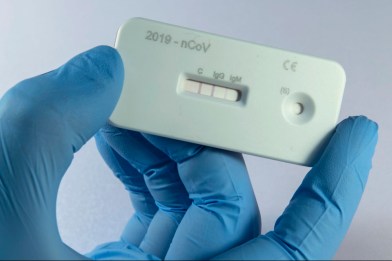
Firstly I am going to use a recently published paper that evaluated 10 antibody tests for SARS-CoV-2 using Enzyme-Linked Immunosorbent Assay (ELISA) and Lateral Flow Immune Assay (LFIA), lateral flow assay utilise the same technology commonly used for pregnancy tests (Crook, 2020). This particular paper has sparked considerable controversy which I will go into later. If you need more detail on how these tests work and their advantages/disadvantages then please take a look at the Oxford COVID-19 Evidence Service (Green et al., 2020). When looking at diagnostic accuracy testing the two main concepts to understand are:

Sensitivity The ability of a diagnostic test to give a positive result when it is supposed to be positive.

Specificity The ability of a diagnostic test to indicate a negative result when it is supposed to be negative.

 Results

After extracting the primary data from the individual tests, meta-analysis was carried out using the ‘mada’ package in R. The summary estimate for sensitivity was 62.7% (95%CI: 57.5 to 67.7) and specificity 96.9% (95%CI: 95.2 to 98.0) The results for the ELISA test and the 9 LFIA tests were plotted below on to a Summary Receiver Operating Characteristic (sROC) curve ( See Figure 1). The y-axis represents the sensitivity (1.0 =100%), and the x-axis represents 1- specificity (0.10 = 10%). For a test to be perfect the summary estimate point should be in the top left corner representing 100% true-positives and 0% false-positives. The blue dot represents the summary estimate for the tests surrounded by a 95% confidence area, the red dot represents the specification target of >98% (95%CI: 96 to 100%)  for sensitivity, and >98% (95%CI: 96 to 100%) for specificity, set by the Medicines & Healthcare Products Regulatory Agency (MHRA., 2020).

Figure 1. sROC curve – Antibody tests

sROC_DT_1_LI (2)

Discussion

So why is so important to set the levels of sensitivity and specificity so high? Imagine we have a small city with a population of 100,000. The prevalence of people who have had the virus and recovered is 6%  and you are using an LFIA test with a sensitivity of 63% and specificity of 97%. Out of 6600 people who test positive for virus antibody only 3780 are true positives which corresponds to 57% having a correct positive diagnosis (See Figure 2.). Another important consideration is that 3% of the population who do not have antibodies test positive (n= 2820) and could lead them to believe they are immune.

Figure 2.Frequency tree of Covid-19 antibody screening

Annotation 2020-05-09 193854

The second point about this paper is that in its present format it cannot be used in any future analysis since the companies that supplied the tests required a commercial confidentiality agreement to be signed with the UK Department of Health making it impossible to discriminate between tests. The current set of results show poor performance, and that is why the MHRA has specifically set its targets high because of the risks that  results could pose if they were used to ease a lockdown, or they become part of an immunity passport system (Mahase., 2020; WHO, 2020). The final point is that whenever we have to deal with diagnostic tests or screening devices in either our professional or private lives we need to be able to identify the products, their comparators, and how accurate they are before making a significant decision to use or purchase the product. False-positive and false-negative results can pose significant harms to both ourselves and the population in general.

Disclaimer:  The article has not been peer-reviewed; it should not replace individual clinical judgement, and the sources cited should be checked. The views expressed in this commentary represent the views of the author and not necessarily those of the host institution. The views are not a substitute for professional advice.

References

COULTHARD, P. 2020. Dentistry and coronavirus (COVID-19) – moral decision-making. Br Dent J, 228, 503-505.

CROOK, D. W. 2020. Evaluation of antibody testing for SARS-CoV-2 using ELISA and lateral flow immunoassays [Online]. Department of Microbiology, John Radcliffe Hospital, Oxford, OX3 9DU, United Kingdom.  [Accessed].

GREEN, K., , A. W., DICKINSON, R., GRAZIADIO, S., ROBERT WOLFF, MALLETT, S. & ALLEN, A. J. 2020. What tests could potentially be used for the screening, diagnosis and monitoring of COVID-19 and what are their advantages and disadvantages? [Online]. Available: https://www.cebm.net/covid-19/what-tests-could-potentially-be-used-for-the-screening-diagnosis-and-monitoring-of-covid-19-and-what-are-their-advantages-and-disadvantages/ [Accessed].

IOANNIDIS, J. P. 2020. A fiasco in the making? As the coronavirus pandemic takes hold, we are making decisions without reliable data [Online]. STAT. Available: https://www.statnews.com/2020/03/17/a-fiasco-in-the-making-as-the-coronavirus-pandemic-takes-hold-we-are-making-decisions-without-reliable-data/ [Accessed].

MAHASE., E. 2020. Covid-19: Confidentiality agreements allow antibody test manufacturers to withhold evaluation results.

MHRA.2020.Target_Product_Profile_antibody_tests_to_help_determine_if_people_have_immunity_to_SARS-CoV-2_ [Online]. Available: https://www.gov.uk/guidance/guidance-on-coronavirus-covid-19-tests-and-testing-kits [Accessed].

WHO.2020. “Immunity passports” in the context of COVID-19 [Online]. Available: https://www.who.int/news-room/commentaries/detail/immunity-passports-in-the-context-of-covid-19 [Accessed].

Disclaimer: the article has not been peer-reviewed; it should not replace individual clinical judgement, and the sources cited should be checked. The views expressed in this commentary represent the views of the author. The views are not a substitute for professional medical advice.